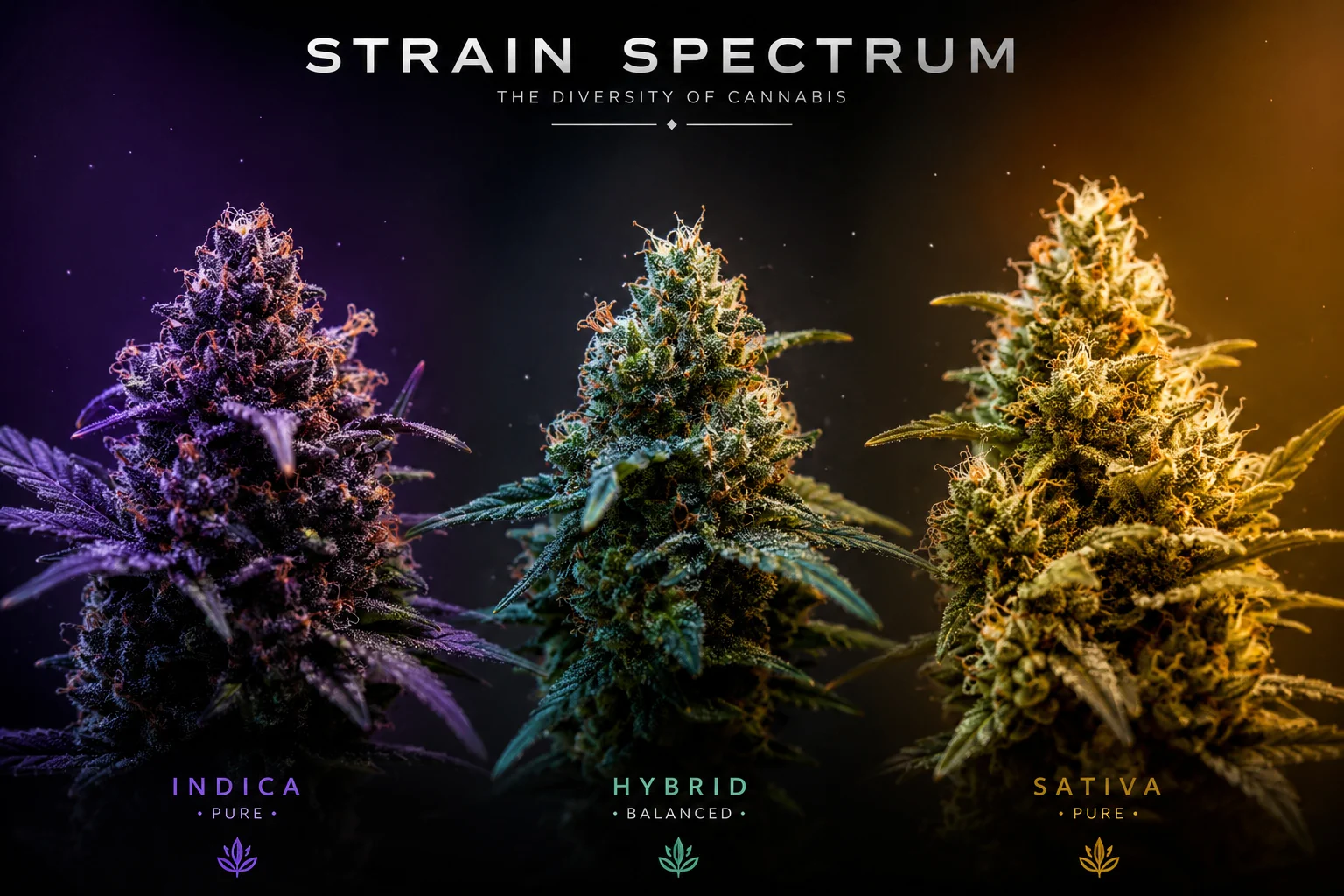
Cannabis Strain Genetics Archive
From ancient landraces to modern exotics — every strain has a story. This is where they all live.
What Is Strain Genetics?
A cannabis strain's genetics is its hereditary blueprint — the specific combination of landrace, hybrid, and modern cultivars that produced it. Every strain descends from a handful of regionally-adapted landrace populations (Afghani, Thai, Colombian, Durban, and others) crossed over decades into the modern hybrids that fill dispensary menus today. Understanding a strain's genetics — its lineage, parentage, and terpene profile — is the most reliable way to predict its effects, aroma, and growing behavior.
This archive maps 382 strains across 13 genetic families and 8 eras, from pre-1970s landraces to the candy-gas exotics of the 2020s. Whether you're researching what makes a landrace pure, tracing the Kush lineage, or hunting the highest terpene strains, every entry links to its parents, children, and genetic family.
Browse the Archive
Find strains by type, era, or origin.
Landraces
Pure regional genetics from around the world
30 entries 💧By Terpene
The chemistry behind every strain's effect
12 entries 🧬All Hybrids
Foundational crosses that started it all
302 entries 🌄Pre-1970s
The original landrace era
28 entries 🔥1970s
Haze, Skunk #1, Northern Lights
8 entries 💎1980s
Blueberry, Cheese, G13, Silver Haze
19 entries ⚡Early 90s
Chemdawg, OG Kush, White Widow
10 entries 🍪Late 90s
Blue Dream, GSC, Granddaddy Purple
12 entries ⛽2000s
Bubba Kush, GG4, Pineapple Express
52 entries 🍬2010s
Gelato, Zkittlez, Runtz, Wedding Cake
93 entries 🖊️2020s
Permanent Marker, Gary Payton, Lemon Cherry Gelato
135 entries 💊By Effect
Relaxing, uplifting, creative, sleepy
40+ entriesKey Hybrids
The strains that defined modern cannabis breeding.
Blueberry
Blueberry Sativa, Blueberry IndicaA landmark strain bred by DJ Short that introduced berry terpenes to cannabis. Blueberry is one of the most influential and recognizable strains ever created, prized for its distinct blueberry aroma, colorful buds, and balanced effects.
Chemdawg
Chemdog, Chem '91The Genesis strain of modern fuel, skunk, and chemical genetics. Born from a fabled 13-seed bag at a 1991 Grateful Dead tour stop, Chemdawg is the direct genetic matriarch of OG Kush, Sour Diesel, GMO, and Gorilla Glue.
Haze
Original Haze, Haze BrothersThe most influential sativa hybrid ever created. Haze is the genetic foundation of virtually all modern sativa-leaning hybrids. Its soaring psychedelic effects and extreme flowering time defined the sativa ideal for generations of breeders.
Northern Lights
NL, Northern Lights #5The most celebrated indica hybrid of all time. Northern Lights set the standard for what an indoor indica could be: compact, fast-flowering, high-yielding, and powerfully relaxing. Its genetics are the primary indica foundation of modern hybrid breeding.
OG Kush
OG, Ocean Grown KushThe undisputed King of West Coast cannabis. Born in Florida from Chemdog '91 and migrated to Los Angeles in 1996 by JoshD and Matt Berger, OG Kush defined California's signature lemon-fuel-pine terpene profile and reshaped global cannabis culture.
Skunk #1
Skunk, Skunk #1The single most important hybrid in cannabis history. Skunk #1 is the genetic backbone of modern cannabis breeding — a stabilized three-way cross that combined the best traits from three continents and became the foundation of the global seed industry.
Landrace Origins
Pure, region-specific strains — the building blocks of everything.
Acapulco Gold
Acapulco, AGThe most famous Mexican landrace strain, immortalized in songs and folklore. Acapulco Gold was considered the pinnacle of imported Mexican cannabis in the 1960s and 70s, prized for its golden-tinged buds and premium effects.
Afghani
Afghan, Afghani IndicaOne of the most influential landrace strains in modern cannabis breeding. Afghani plants are short, bushy, and fast-flowering with extremely resinous buds. It is the primary genetic source of indica traits in virtually all modern hybrids.
Colombian Gold
Colombian, Colombian RedThe most commercially significant Colombian sativa of the 1960s-70s, known for its golden-amber buds and balanced, uplifting high. Colombian Gold was the bedrock of the US import market for over a decade.
Durban Poison
Durban, Durban Poison SativaA pure sativa landrace from the port city of Durban, South Africa. Unlike most sativas, Durban Poison has a manageable flowering time and exceptional resin production, making it a staple of sativa breeding.
Panama Red
Panamanian Red, PRA legendary Central American sativa known for its red-tinged buds and powerfully psychedelic effects. Alongside Acapulco Gold and Colombian Gold, it formed the trinity of premium Latin American imports of the 1960s and 70s.
Thai
Thai Stick, Thailand SativaA pure sativa landrace from Thailand that became legendary in the 1970s through 'Thai Stick' imports. Its soaring, psychedelic sativa high and distinct floral-spicy aroma made it one of the most sought-after imports of the era.
Cannabis Terpenes
Why two strains at 25% THC feel nothing alike. The 12 aromatic compounds that drive aroma, flavor, and effect — explained with primary research.
Frequently Asked Questions
What is strain genetics?
A cannabis strain's genetics is its hereditary blueprint — the specific combination of landrace, hybrid, and modern cultivars that produced it. Every strain traces back to a handful of regionally-adapted landrace populations crossed over decades. Understanding a strain's genetics (its lineage, parentage, and terpene profile) is the most reliable way to predict its effects, aroma, and growing behavior.
What is a cannabis strain database?
A cannabis strain database is a structured catalog of strains documenting each cultivar's lineage, parentage, effects, terpene profile, THC content, and breeding history. This archive catalogs 382 strains across 13 genetic families and 8 eras, from pre-1970s landraces to 2020s exotics.
What was the first weed strain?
There was no single "first" strain — cannabis existed as thousands of regionally-adapted landrace populations for centuries before humans began naming and crossing them. The first named, intentionally-bred hybrids appeared in the 1970s (Skunk #1, Haze, Northern Lights). The oldest continuously-cultivated landraces include Afghani, Thai, and Durban Poison.
What is a landrace strain?
A landrace strain is a pure, naturally-occurring cannabis population that adapted to a specific region over centuries without human cross-breeding. Examples include Afghani (Afghanistan), Thai (Thailand), and Durban Poison (South Africa). Landraces are the genetic foundation of every modern hybrid — all commercial strains trace back to them.
How many cannabis strains are there?
There is no definitive count, but modern breeding has produced thousands of named cultivars. This database catalogs 382 strains — 30 landraces and 302 hybrids — spanning the pre-1970s through the 2020s, each with verified lineage and genetic family links.